
The history of the Goodyear blimp’s presence in Houston begins in 1969. By then, the Goodyear Tire and Rubber Company had been using its blimps for decades as a powerful advertising tool and an aerial filming platform. However, with the dawn of a new era of national televised sports broadcasts, the company needed a base located in the heart of one of the country’s largest and most dynamic markets. Houston, with its fast-growing economy, developed sports infrastructure, and favorable geographical location, became the perfect choice. The city provided access to major events across the Southern and Southwestern U.S., allowing the blimp to efficiently cover a wide region. Learn more about the most famous blimp on houston-future.com.
A Unique Structure
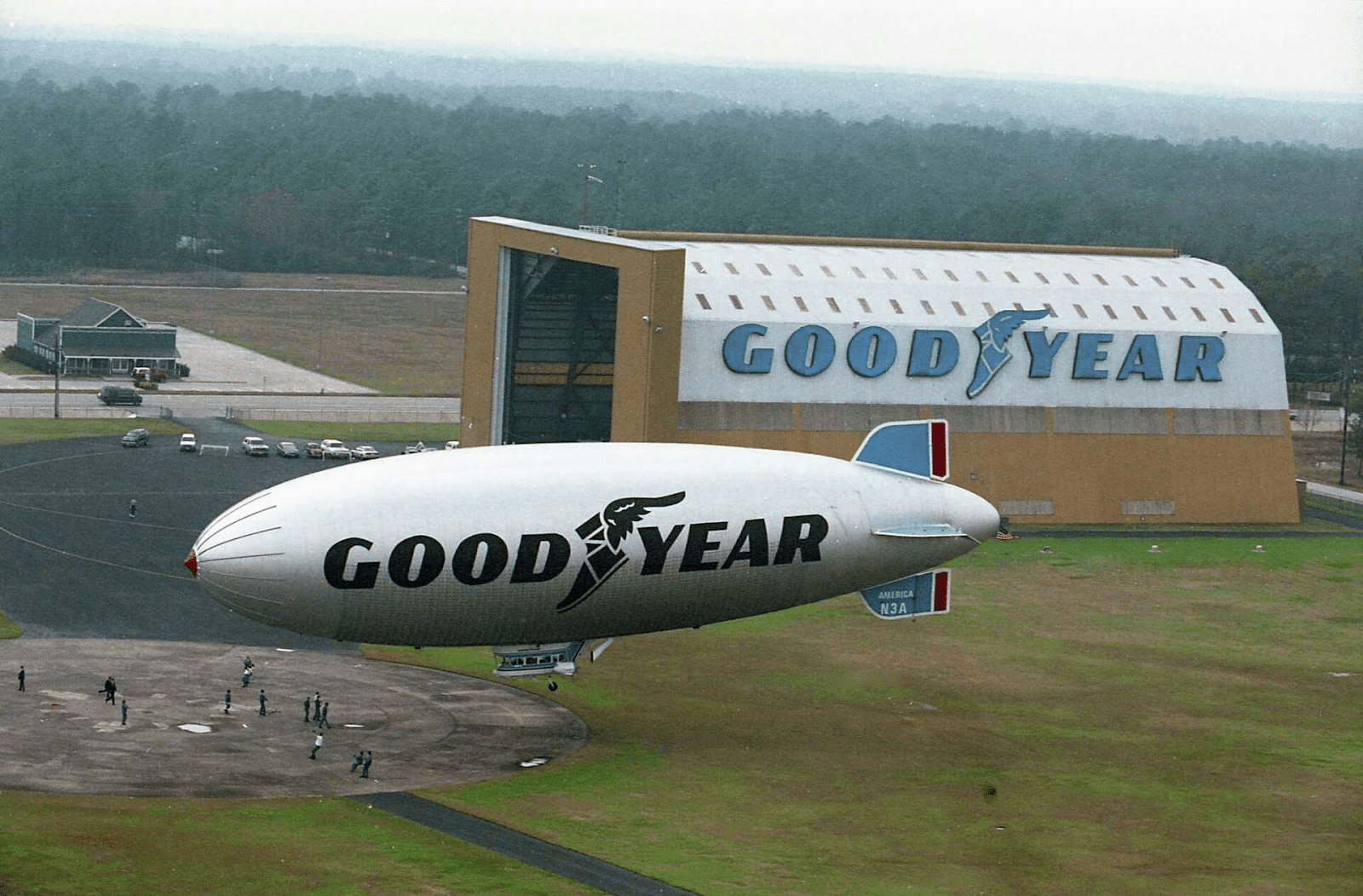
To establish a permanent home for the blimp, Goodyear built a unique hangar in the suburb of Spring, just north of Houston. This structure wasn’t just a storage facility; it served as a technical center where a team of specialists serviced the blimp, refilled it with helium, and performed all necessary maintenance. The hangar became an important part of the local landscape, highlighting Houston’s unique status as one of the few U.S. cities with its own blimp base. It was a simple yet exceptional structure that ensured the airship’s safety in Texas’s sometimes severe weather conditions.
“America” and “Columbia” in the Sky
The first blimp to be based in Houston was the “America.” It began its mission in 1969, right after the hangar’s construction was completed. The “America” was a symbol of an era of optimism and technological progress, and its flights over Houston became a common sight. In 1979, the “America” was replaced by a new, more modern blimp: the “Columbia.” The “Columbia” is the blimp that most Houston residents associate with the Goodyear era. It flew over the city for more than a decade, becoming not just an advertising symbol but a part of Houston’s cultural life.
A New Perspective on Sports
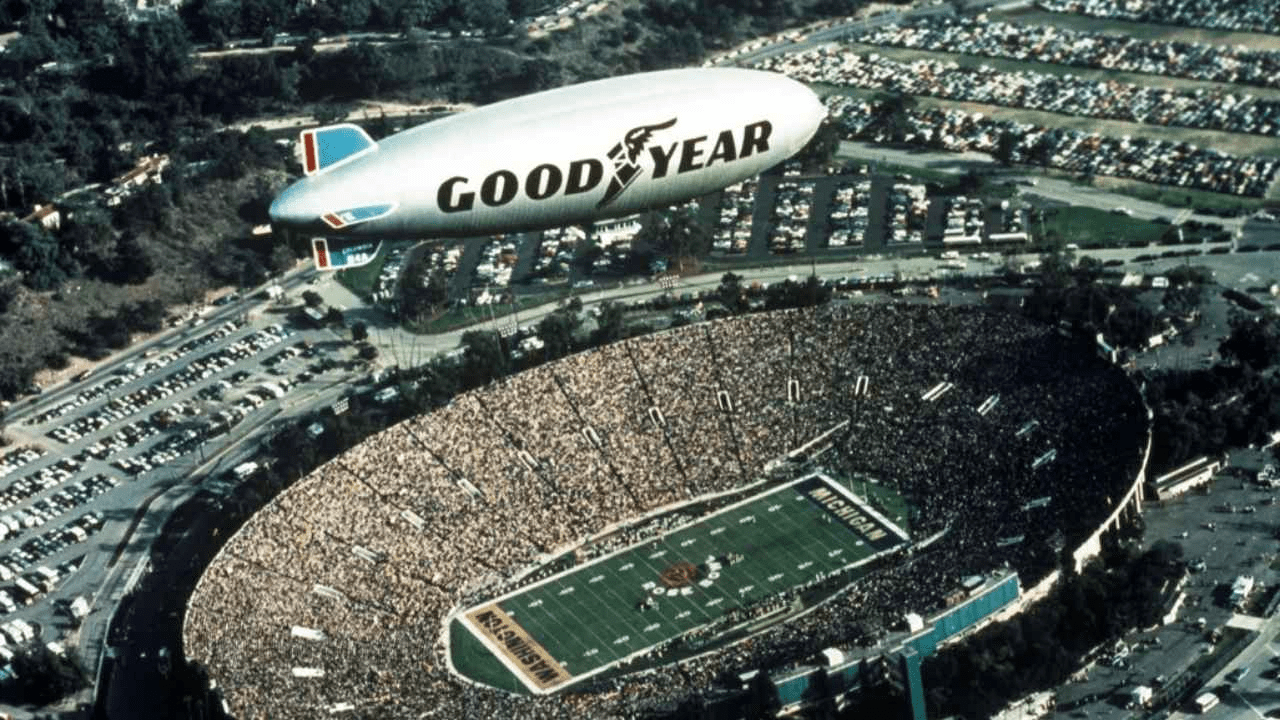
The primary “job” of the Houston-based blimp was filming sporting events. In those days, before the advent of drones and high-tech helicopters, blimps were the ideal platform for television broadcasts. They could hover in the air for hours, providing smooth, stable, and wide shots that were impossible for ground-based cameras to capture. The blimp regularly featured games of the Houston Oilers in the NFL, the Dallas Cowboys, and baseball games, including those at the Astrodome, which was one of the most modern arenas in the world at the time. The blimp’s shots, showing majestic stadiums and the Houston skyline, elevated the quality of sports broadcasts and highlighted the scale of the city’s major events.
Advertising and a City Symbol
Beyond sports, the Goodyear blimp was a powerful advertising medium. Its massive size and distinctive design made it perfect for visual promotion. But over time, the airship became more than just a billboard. It evolved into a part of Houston’s identity. Its appearance in the sky was a sign of a major event, and for many residents, it symbolized the city’s dynamism and progress. It was a kind of “urban angel” that quietly soared above the chaos of the metropolis.
One of the key advantages of the blimp over helicopters was its ability to move silently and smoothly. Helicopters created noise and vibrations that complicated high-quality filming. The blimp, thanks to its use of helium, was incredibly stable. It could slowly circle a stadium or hover over a single point, giving camera operators ideal working conditions. This was cutting-edge technology for its time, making possible the level of broadcasts we now take for granted.
The End of an Era
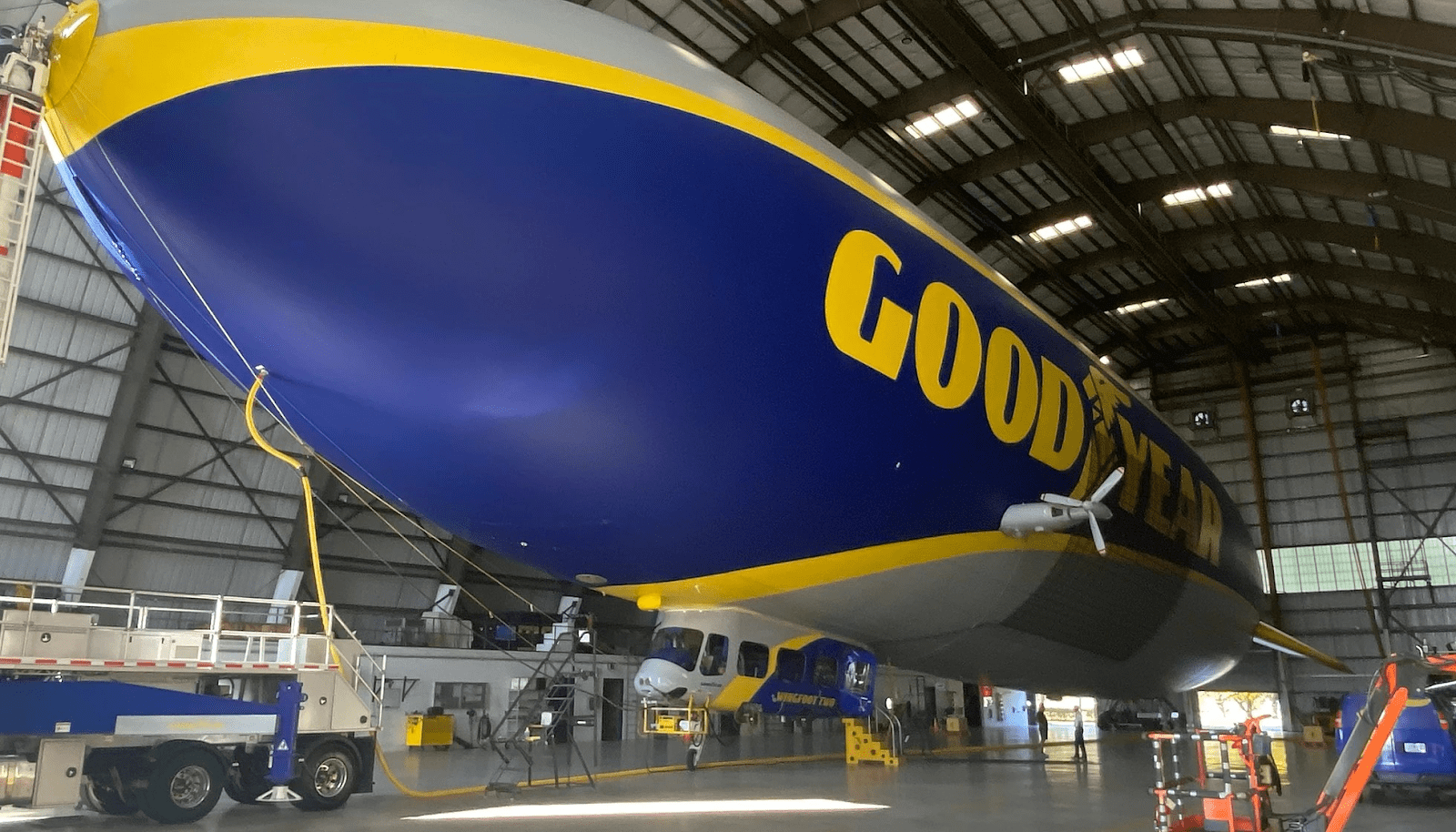
The era of a permanently based Goodyear blimp in Houston officially ended in 1992. The decision was a result of several key factors that made the blimp’s constant presence in the city commercially unfeasible. It was a logical consequence of both technological progress and a shift in the company’s strategic priorities.
First, innovations in aerial filming technology fundamentally changed the market. By the 1990s, helicopters had become far more advanced, with improved stability and maneuverability, and cameras had become lighter and more compact. This made it possible to capture high-quality footage at a lower cost. Unlike the blimp, which required a large hangar, specialized ground crew, and was sensitive to weather conditions, helicopters were more flexible and responsive. They could move quickly between different locations, making them the ideal choice for fast-paced sports reporting.
Second, the Goodyear company re-evaluated its global strategy. At that time, it was decided that three permanent bases would be sufficient to cover all major events across the U.S. Houston, with its unpredictable weather and frequent storms, no longer met these new requirements. Bases in more climatically stable locations, such as California and Florida, along with a central base in Ohio, were deemed more effective for maintaining the nationwide flight schedule.
After the base was relocated, the hangar in Spring was dismantled. This event was a symbolic farewell for many residents. The blimp, which had been an integral part of the city’s landscape for two decades, was gone. Although a permanent blimp is no longer in Houston, its legacy lives on in the memories of generations. It remains a part of the city’s history, symbolizing an era when Houston established itself as a national sports and business hub. Even today, when a Goodyear blimp flies in for major events like the Super Bowl hosted in Houston, it evokes nostalgia and brings back memories of a time when it was a familiar sight in the Texas sky.

