
While Silicon Valley builds yet another social media platform, Houston is quietly and confidently engineering the future of the human body. This is home to the Texas Medical Center (TMC)—a colossal urban institution and the largest medical complex on the planet. Within this unique ecosystem, packed with labs like Medical Device Labs, the full cycle of the bionic revolution comes to life: from an initial sketch and 3D printing of a biocompatible prototype to successful testing right in the operating room.
Here, engineering blurs the lines between biology and technology, transforming Houston into the global capital of cybernetic medicine. Driven by billions in investments and direct collaboration between robotics developers and world-class surgeons, the city is pioneering a new era of rehabilitation. Robotic prosthetics that sense human intent and intelligent surgical systems are built right here—and this is only the beginning of how Texas is rewriting the capabilities of the human body. Read more about this incredible breakthrough in prosthetics at houston-future.com.
Neuroprosthetics and Neuro-robotics: The Rice University and Houston Methodist Collaboration
One of the most promising areas of modern bionics and medical engineering in Houston thrives through a powerful strategic alliance between Rice University and Houston Methodist hospital. Their joint Center for Translational Neural Prosthetics and Interfaces is a unique scientific hub. It brings together leading neurosurgeons, engineers, robotics developers, and artificial intelligence experts to create technologies that seemed like science fiction just yesterday.
Brain-Computer Interfaces and Stroke Recovery
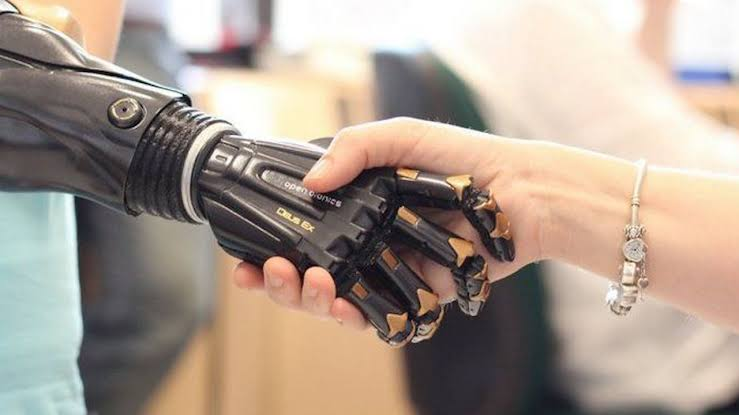
The core focus of the center is the development of high-precision implantable and non-invasive neural signal readers for the brain and spinal cord. Utilizing advanced machine learning algorithms to decode complex electrical impulses of the nervous system, researchers are building a direct bridge between human thought and digital devices. This enables patients with severe central nervous system disorders, paralysis, or lost limbs to control highly functional bionic prostheses and complex exoskeletons using sheer thought alone, restoring their lost independence.
From the Lab to Clinical Practice
The greatest value of this partnership lies in the speed at which scientific discoveries are translated into real medical practice. The specialized Digital Health Institute laboratory operates directly within the hospital’s clinical departments. Engineers test robotic adaptive orthoses right during patient rehabilitation, gathering millions of data points in real time. This continuous feedback loop allows artificial intelligence algorithms to be adjusted on the fly, tailoring the robotics to the individual anatomy and recovery pace of every specific person.
The joint efforts of Rice University scientists and Houston Methodist physicians not only prove the high efficiency of the synergy between fundamental science and practical medicine, but also shape global standards for the entire field of neurorehabilitation. Through the integration of artificial intelligence and bioengineering, the boundary between the biological body and digital technology is gradually fading, unlocking fundamentally new horizons for restoring patients’ quality of life after severe trauma and strokes.
Specialized Labs and Startups: Developing Autonomous Assistants
Aside from academic institutions and medical giants, Houston boasts a thriving ecosystem of commercial developments. Young startups born out of the TMC Innovation business incubator are turning bold scientific concepts into high-precision commercial products. They are creating next-generation robotic tools that minimize human error and enhance the safety of the most complex medical procedures.
- High-precision vascular access. The development of autonomous and semi-autonomous portable robots—such as the Euclidproject by Houston Medical Robotics—for ultrasound-guided vessel catheterization. The robotic system detects deep or damaged veins within seconds and performs precise punctures on the first try, which is critical in emergency medicine and intensive care.
- Microsurgical manipulators. The creation of flexible, soft robots capable of delicately navigating complex anatomical structures without the slightest damage to surrounding living tissues. Ultra-high flexibility allows for procedures in previously unreachable areas of the brain or internal organs.
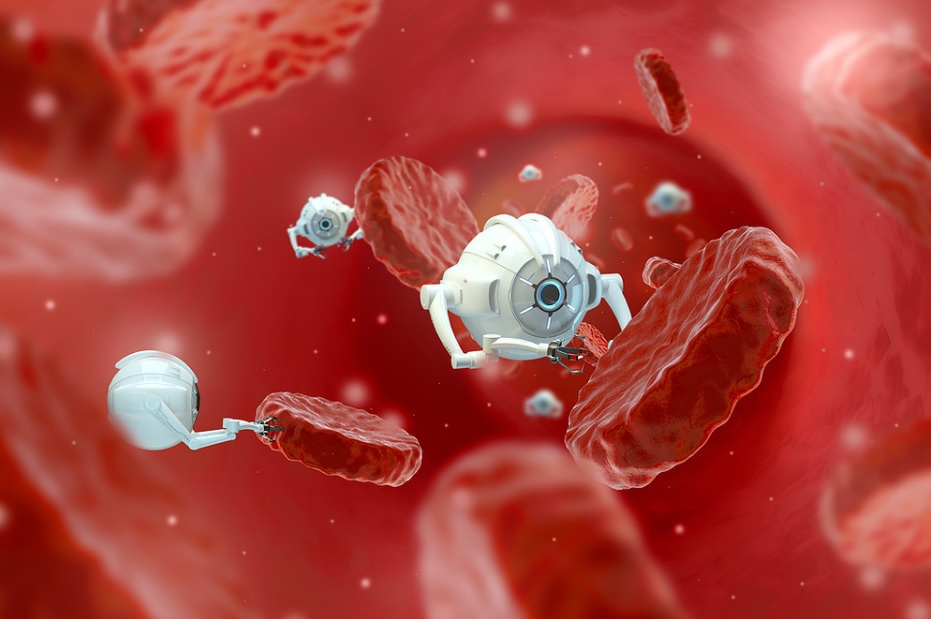
- Robotic tumor navigation. The use of sensor-guided smart microrobots for targeted chemotherapy delivery or cancer marker placement directly during minimally invasive surgeries. This lowers the toxic load on a healthy body and enables surgeons to remove tumors with micron-level precision.
The evolution of such compact, intelligent assistants is transforming the very format of medical intervention. Surgeries that once required hours of incisions and prolonged rehabilitation are now turning into highly accurate, targeted procedures thanks to Houston startups.
Driven by the synergy of private capital and engineering ingenuity, Houston is confidently shaping the market for the robotic surgery of tomorrow. Bulky equipment of past generations is being replaced by autonomous microsystems capable of saving thousands of lives in clinics worldwide.
NASA’s Space Heritage Applied to Terrestrial Medicine
A unique advantage for Houston is the proximity of its medical cluster to the legendary Johnson Space Center. Technologies designed to keep astronauts alive in open space and to operate complex humanoid robots like Robonaut and Valkyrie are finding a second life in conventional earthly hospitals. Engineering solutions tailored for extreme orbital conditions are fundamentally reshaping what we thought possible in restoring the human body.
Feedback Technologies and Exoskeletons
Tactile feedback algorithms and high-precision power actuators, originally created by NASA specialists for teleoperating robots and servicing space stations, are now integrated into cutting-edge bionic prosthetics and rehabilitation exoskeletons. They grant patients with lost limbs or nervous system damage the unique ability to feel the texture, density, and resistance of objects they grasp with a bionic hand. This restores not only physical functionality, but also natural sensory perception, creating a complete illusion of having one’s own limb back.
Space-Grade Reliability in the Operating Room
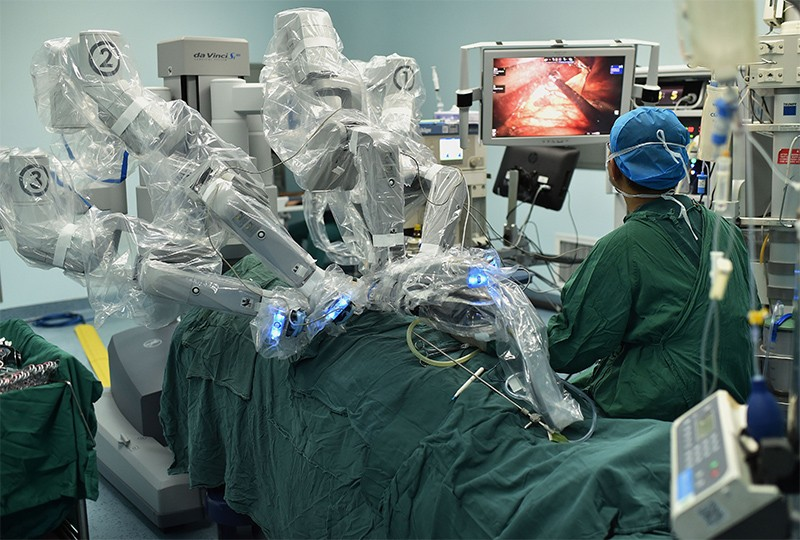
Triple-redundancy architecture and fault-tolerant AI algorithms borrowed from the aerospace industry are becoming the new gold standard for high-tech surgery. In a space mission, the cost of a mistake is the crew’s lives, and Houston applies this exact standard to medical assistants. As a result, an autonomous or semi-autonomous surgical robot is guaranteed never to make a single erroneous or uncontrolled movement during critical vascular or brain manipulations.
Transferring NASA’s space tech from the drawing board to the clinical wards of the Texas Medical Center exemplifies how fundamental space exploration yields practical benefits for each of us.
Through this synergy of space engineering and medicine, patients worldwide gain access to next-generation rehabilitation equipment and prosthetics, where space-grade reliability serves to restore a full human life.
A New Era of Surgery: Microrobots and Artificial Intelligence
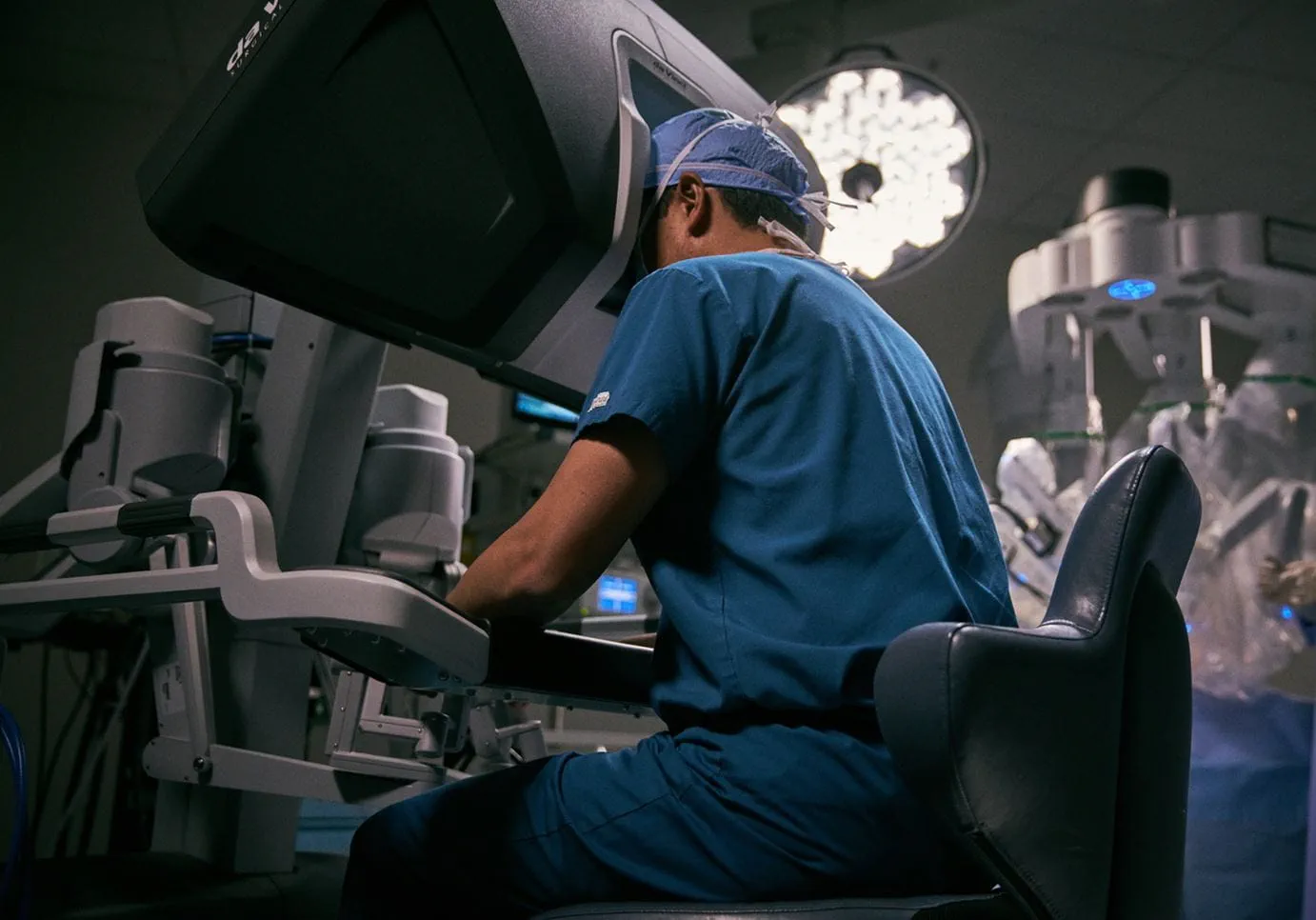
Modern advancements in medical robotics in Houston focus on minimizing surgical invasiveness while steadily increasing the autonomy of surgical systems. Combining ultra-precise mechanical manipulators with deep machine learning turns a classic operating room into a highly intelligent digital hub, where every movement of the surgeon is augmented by computational power.
- Real-time AI integration. Robotic complexes instantly process and analyze bulk MRI and CT data directly during surgery. Artificial intelligence cross-references prior scans with the current state of tissues, adjusting the instrument’s trajectory with micron-level precision and fully compensating for natural human hand tremors or patient breathing movements.
- Soft robotics. Utilizing special elastic polymers, hydrogels, and flexible structures instead of traditional rigid metal parts guarantees the safest and most delicate contact with human internal organs. Such soft robotic systems effortlessly maneuver around complex anatomical obstacles without deforming or injuring healthy tissue surrounding the intervention zone.
- Robotic sensorics. Equipping micro-tools with cutting-edge optical sensors and spectroscopic detectors enables real-time analysis of tissue molecular composition. This allows the surgical system to literally «see» and clearly outline cancer cell margins right during resection, ensuring complete tumor removal while minimally excising healthy tissue.
The adoption of such biocompatible microsystems and smart sensors fundamentally redefines complex surgeries, driving bodily trauma down to an absolute minimum.
Thanks to innovations by Houston researchers and engineers, this new surgical era relegates massive open-cavity incisions to history, substituting them with precise, safe, and minimally invasive procedures featuring near-instant patient recovery times.
Social and Medical Impact: How Houston’s Bionic Innovations Transform Lives
Thanks to the synergy of research centers, the aerospace industry, and investors, Houston has forged a unique translational medicine model. Innovations do not remain as paper blueprints; within years, they turn into approved protocols and mass-produced devices.
The growth of bionics and robotics within Texas Medical Center laboratories is already restoring mobility to individuals with severe injuries, lowering surgical complication risks, and unlocking new horizons for future medicine.
Medical robotics is no longer just an auxiliary tool in a surgeon’s hands—it has evolved into a full-fledged, highly intelligent partner. Houston’s specialized labs and startups prove that the future of healthcare lies at the intersection of biology, artificial intelligence, and aerospace engineering.
The combination of neural interfaces, autonomous micro-assistants, and soft biocompatible materials blurs the line between the human body and digital systems. This not only opens new horizons for tomorrow’s medicine, but also sets a new global standard. Treatment becomes personalized, painless, and maximally effective, restoring a fulfilling life even in previously hopeless clinical scenarios.

