

Bridges have always been more than just structures. They connect not only shores but also people, ideas, and eras. Traffic flows across them—fast, relentless, much like life itself. Every bridge has its own story. Some are silent witnesses to daily routines, while others whisper of great change. Sometimes, you just need to look up—to where steel touches the sky—to remember that we, too, are always searching for connection.
One such bridge is the Fred Hartman Bridge, which crosses the Houston Ship Channel and connects the cities of Baytown and La Porte. We’ll explore its story ahead on houston-future.com.
The Beginning of Construction
The history of this project dates back to the late 1980s. The need for a new crossing was clear, driven by the region’s growing demands and the limitations of the aging Baytown Tunnel. The tunnel created significant obstacles for shipping, especially after the shipping channel was deepened. To ensure the uninterrupted flow of both vehicle and water traffic, a modern and large-scale solution was required.
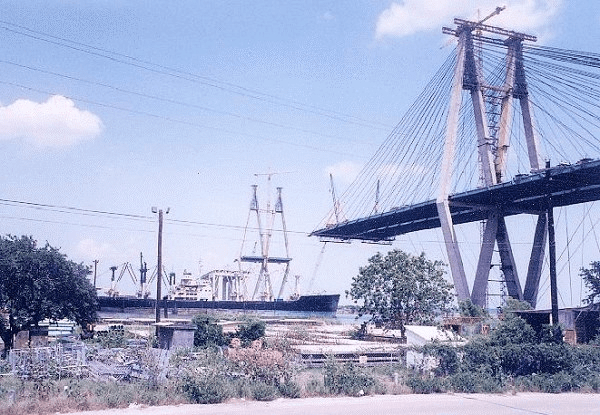
In 1987, the massive bridge construction project began. It proved to be an extremely complex and multi-phased endeavor, requiring the coordinated efforts of many specialists from various fields. Although the initial project plan promised completion within two years, things didn’t go as planned, as a completely different turn of events awaited…
Difficulties and a “Successful” Solution
After the Mexican company originally contracted to produce the steel went bankrupt, a new agreement was made with a South African company. This choice sparked sharp and mixed reactions. Complaints were filed due to the country’s apartheid policy, but there were few other options. The two-year construction timeline was missed, and the completion date was postponed several times. For eight years, intensive construction work continued, which included laying massive foundations, erecting majestic pylons, and installing the complex system of cables.
The Role of Fred Hartman
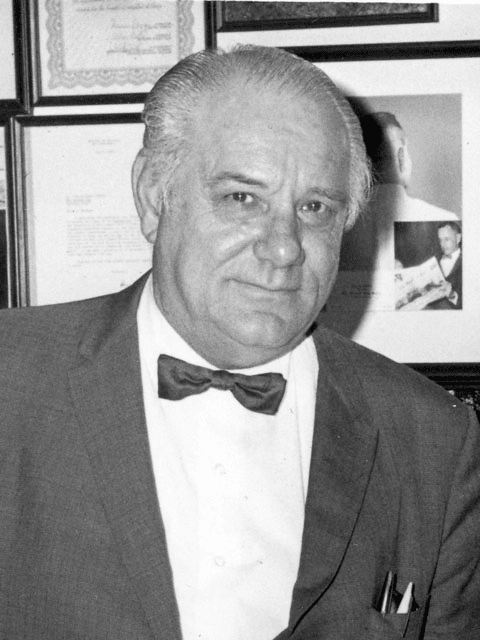
Fred Hartman was the editor and publisher of the Baytown Sun, a newspaper that played a major role in the bridge’s construction. A single letter forwarded through the newspaper helped galvanize public interest in finishing the project. This support was crucial in finally completing the construction, and in 1995, the bridge was ceremoniously opened, named in honor of the very same Fred Hartman whose publication had made such a difference.
Unfortunately, Hartman himself did not live to see this event, as he passed away in 1991. His death became an even greater motivation to name the bridge after him as a sign of respect for a great man. For his significant career achievements, the Baytown Chamber of Commerce even named Fred Hartman its “Man of the Half-Century.”
Grand Opening and Use
On September 27, 1995, the grand opening of the Fred Hartman Bridge took place. This momentous occasion was a true celebration for the entire region. Former U.S. President George H.W. Bush was in attendance, highlighting the importance of this infrastructure project for both the state and the country. The bridge’s opening not only significantly improved the transportation link between Baytown and La Porte but also became a symbol of overcoming difficulties to achieve a goal.
Today, the Fred Hartman Bridge plays a key role in Texas’s transportation infrastructure. It is an integral part of daily life for the region’s residents, providing a fast and convenient connection between industrial centers and residential areas. Furthermore, the bridge is a critical component of regional hurricane evacuation plans, ensuring a safe exit for the population from potentially dangerous zones.
A Symbol of the Region
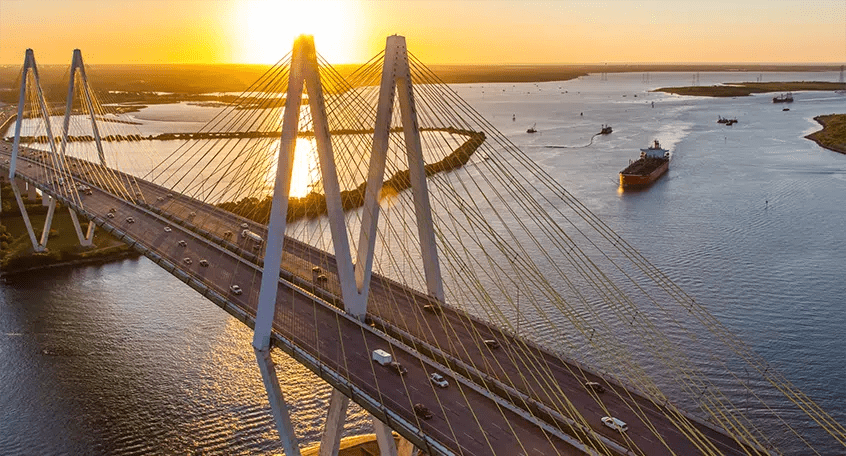
Over time, the Fred Hartman Bridge has become a true symbol of the region. Its recognizable silhouette often appears in movies, commercials, and photographs illustrating the beauty and industrial might of Texas. Local residents are proud of this grand structure, which is not only a functional object but also a visual landmark on the horizon.
And there is indeed much to be proud of. The bridge’s engineering design is impressive in its thoughtfulness and elegance. The roadway has 8 lanes, so traffic jams are rare, and driving across it is a pleasure. Particularly noteworthy are the two diamond-shaped pylon towers that rise to a height of 436 feet (133 meters). That’s as tall as a 45-story building! Their unique shape is not just an architectural highlight but also provides exceptional stability against strong winds—a critical feature in Texas’s hurricane-prone climate.
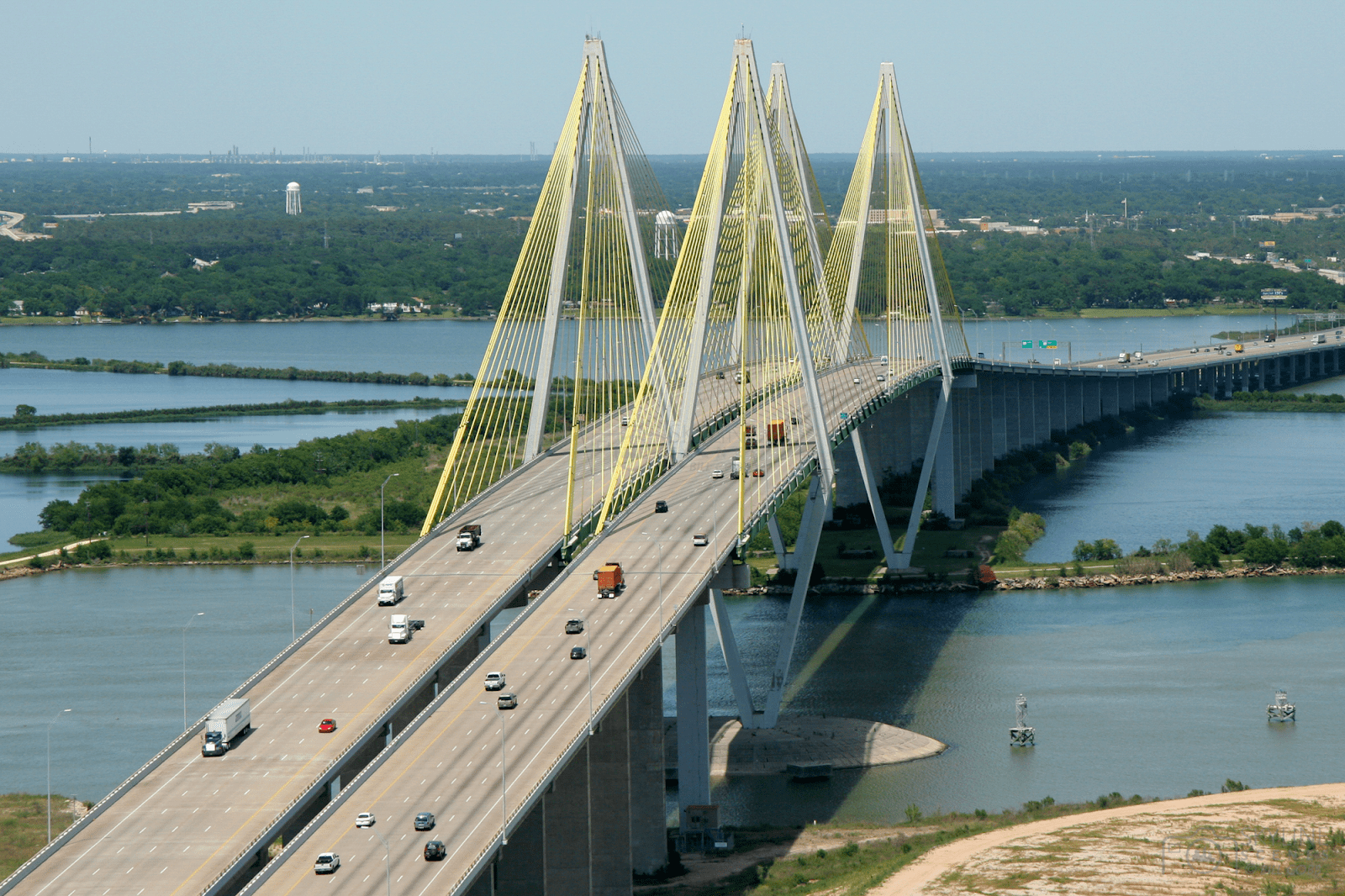
The Fred Hartman Bridge is more than just a crossing over a waterway. It is a testament to human ingenuity, perseverance, and the ability to realize the most ambitious projects. It stands as a symbol of progress, connection, and the unbreakable spirit of Texas, reminding us of the importance of infrastructure for the development of society and the economy.
This engineering masterpiece continues to serve the public, providing reliable transportation every day and remaining one of the most significant landmarks in the region. The bridge continues to inspire new generations of engineers and builders, demonstrating the greatness of infrastructure projects that shape the face of the modern world.