

By a twist of fate and a series of historical factors, Houston grew organically rather than from an architect’s blueprint. Its structure was shaped by oil booms, spontaneous decisions, and the free market. There is no traditional zoning here, but there is a unique urban landscape that combines skyscrapers, industrial zones, residential neighborhoods, and green spaces in unexpected combinations. This makes the city unique among other U.S. metropolises. We’ll explore the story of Houston’s rise as a multinational city ahead on houston-future.com.
From Swamps to a Metropolis
The history of Texas’s largest city began in 1836 as a small settlement on the banks of the Buffalo Bayou. Thanks to its strategic location and the development of railroads, Houston quickly became a major commercial center. Today, it’s hard to imagine it without giant freeways, sprawling suburbs, hundreds of cultural contexts, and… swamps. But it was from the swamps that it all began.
When the Allen brothers decided to found a city here, they chose a less-than-ideal spot: low-lying land, constant floods, mosquitoes, and oppressive heat. However, it offered access to a waterway, which sealed Houston’s fate as a trading and port city.
Over the years, oil derricks, and later skyscrapers, rose from the former swamplands. In the 20th century, the oil boom transformed Houston into the energy capital of the United States. After the discovery of the Spindletop oil field in 1901, the city became the epicenter of the oil industry, fueling its rapid growth. With the opening of the NASA Johnson Space Center in 1961, the city also became a gateway to space.
However, Houston is not just about big numbers and ambitions. It is a city of contrasts: wealth is intertwined with poverty, multiculturalism with stratification, and futuristic medical clusters with neighborhoods lacking sidewalks. Yet, Houston has one of the youngest vibes of any city. It is dynamic, diverse, and perpetually in motion.
The City With No Zoning
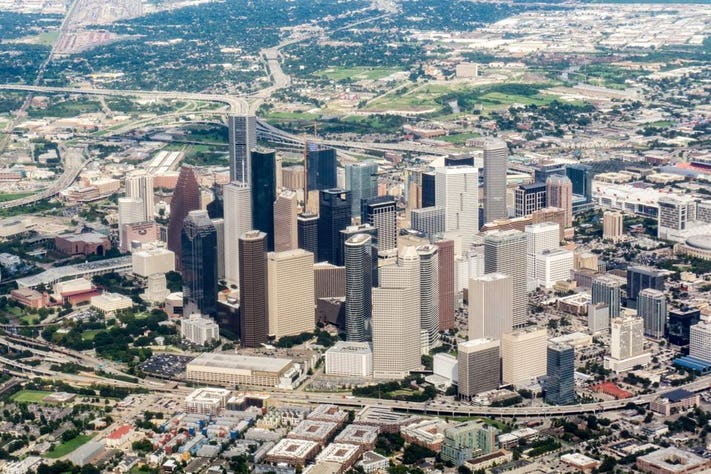
Another feature that distinguishes Houston from other U.S. cities is its lack of traditional zoning. The system that separates areas into residential, commercial, and industrial zones in other cities simply doesn’t exist here. Despite several attempts to introduce zoning, the city’s residents have rejected such initiatives three times. To get an objective opinion, the government even held referendums, but citizens did not agree to change their established way of life. This has led to a unique urban landscape where, for example, a retail store can be right next to a residential home or an office. This factor doesn’t negatively impact the daily lives of Houstonians.
From 1997 to 2017, Houston’s urban footprint increased by 63%, equivalent to adding over 1,000 square kilometers (about 386 square miles) of developed land. This growth was primarily driven by suburban expansion and the construction of new residential complexes. This rapid pace was largely due to the absence of zoning, which allowed developers to respond quickly to demand, contributing to housing affordability. However, it also led to problems with infrastructure and the environment—issues that continue to pose challenges for residents today.
A Demographic Mosaic
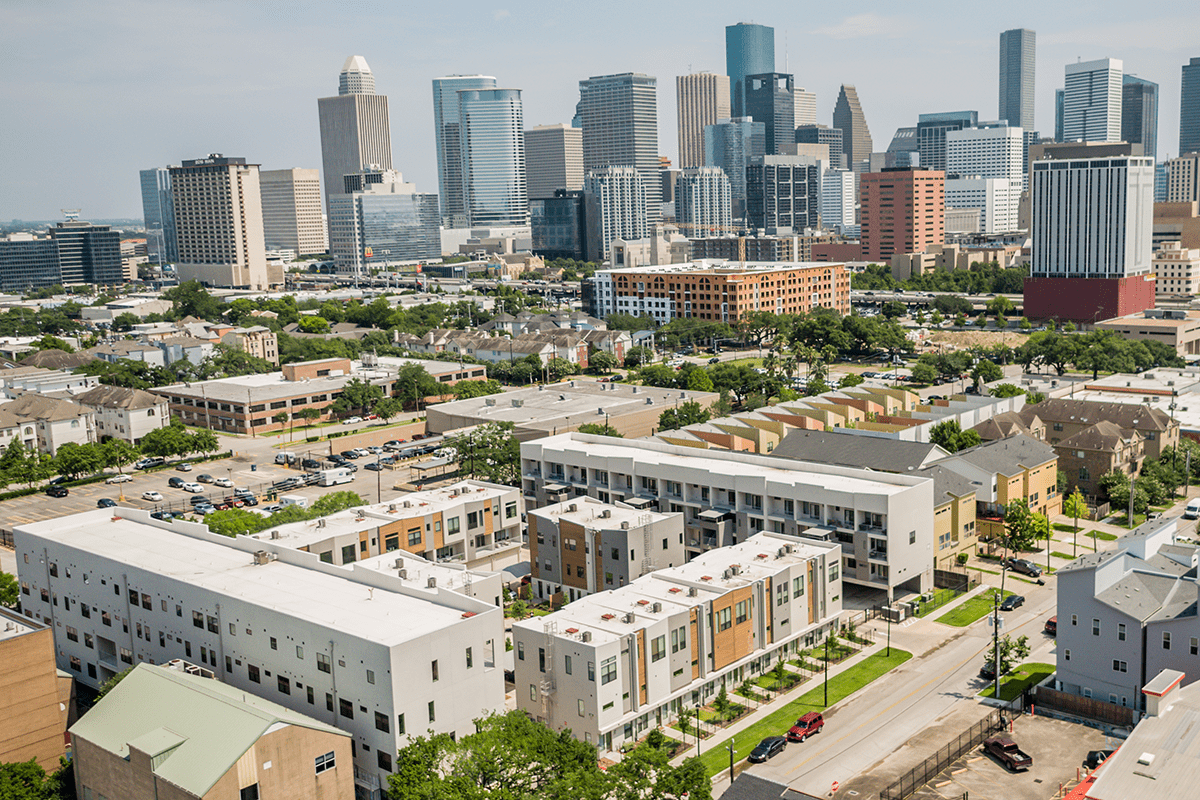
In terms of ethnic and cultural diversity, Houston is one of the top three most diverse metropolitan areas in the United States. At its dawn, the city was predominantly settled by Anglo-Americans, who brought slavery with them. Before the Civil War, the Black population constituted a fairly large portion of the residents, the vast majority of whom were enslaved.
With the arrival of the railroads and the oil boom in the early 20th century, Houston began a period of rapid economic ascent. The city needed a labor force, which attracted huge flows of diverse populations from all corners of the United States and neighboring Mexico. Migrants seeking temporary work during the Great Depression and after World War II often settled in Houston permanently.
Since the 1960s, the city has undergone profound changes.
- The U.S. Immigration and Nationality Act of 1965 abolished national origin quotas, opening the doors to immigrants from Latin America, Asia, and Africa.
- Houston became a major center for Vietnamese refugees after the Vietnam War (1975), as well as for Cubans, Indians, Pakistanis, and immigrants from Nigeria, Ethiopia, and Iran.
- The oil and medical industries, as well as NASA, attracted engineers, scientists, and doctors from all over the world.
- By the 1990s, Houston was already a mosaic of languages, traditions, cuisines, and beliefs.
By early 2020, Houston’s demographic picture was as follows: Hispanic residents made up the largest group at over 45%. White (non-Hispanic) residents were less than 25%. African Americans were about 23%, and Asians were over 7%.
Challenges of the Future
Texas’s largest city faces ongoing problems related to urbanization, including the aforementioned issues with its water systems and environment. Due to excessive groundwater use and oil extraction, the city is gradually sinking. Some areas are subsiding by more than 1 inch (2.5 cm) per year. This, combined with rising sea levels, increases the risk of flooding. A case in point is the story of the Brownwood neighborhood, which was abandoned due to constant flooding.
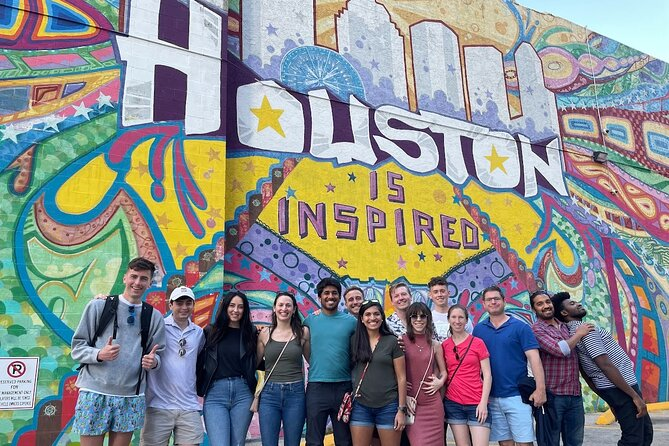
But Houston continues to develop, maintaining its unique approach to urbanism. The absence of zoning provides flexibility but also requires responsible planning and attention to environmental and social aspects. Despite these challenges, the city is actively working to improve its urban environment. To illustrate these positive changes, consider the “Underpassage” project. Activists are transforming gloomy underpasses in the city center into vibrant art spaces with interactive lighting and sound effects. This initiative aims to increase the safety and attractiveness of pedestrian zones, and it’s one of many examples of positive change.
While Houston is often criticized for its endless highways, pollution, and heat, the city is like modern America in miniature: sprawling, imperfect, but alive, ever-changing, and open to new beginnings. From a swamp to a metropolis—its path is not from a heroic epic, but from a real story of survival, business, and constant adaptation.