
For residents of Houston today, high-speed internet is a fact of life, an essential part of the daily routine. Instant downloads, seamless video calls, and smooth streaming are all the norm. But back in the late 20th century, accessing the web was a luxury marked by the piercing shriek of a modem and a long, painful wait. Houston’s journey into the digital age is a fascinating story, mirroring the global evolution of the internet from an academic tool to a commercial powerhouse. You can read more about this on houston-future.com.
The Academic Roots of a Digital Revolution
The internet’s arrival in Houston is deeply tied to local universities, which were the first pioneers of the new digital era. In the late 1980s and early 1990s, access to the internet’s predecessor, the NSFNET network, was limited exclusively to academic institutions. Leading universities in the city, such as Rice University and the University of Houston, were among the first to get these crucial connections, allowing them to become key nodes in this growing infrastructure.
This network was used solely for exchanging scientific data and research. Instead of the browsers we use today, researchers relied on command lines to send text messages and transfer files. This was a period when the digital world existed only in labs and professors’ offices, completely unknown to the public. This early network was a quiet but powerful foundation for the future communication revolution. While the hustle and bustle of Houston’s city streets went on as usual, a technology was taking root in its academic centers that would soon change the world forever.
The Era of the Modem’s Beep
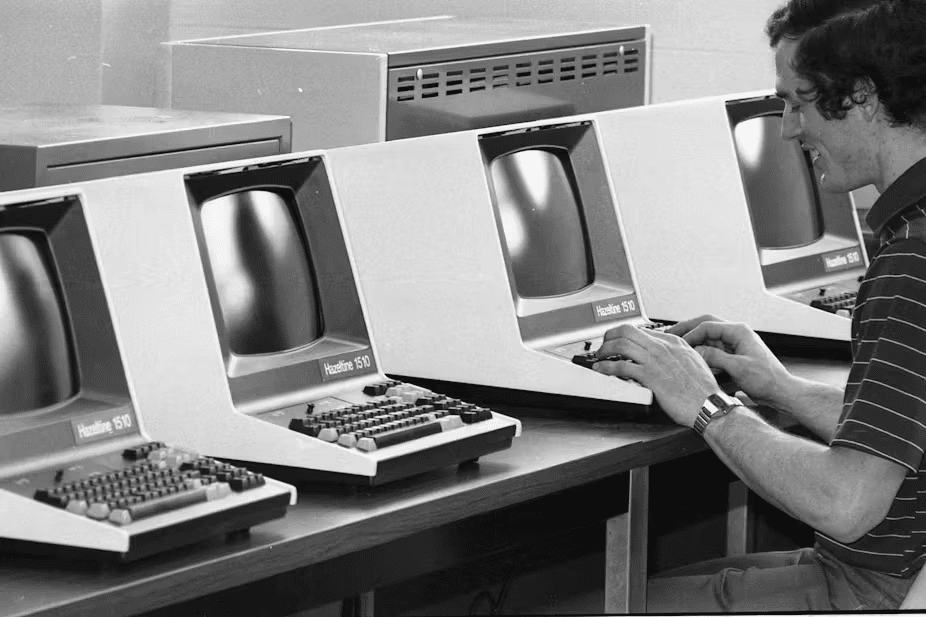
The real revolution began in the mid-1990s when internet access became commercial. During this time, the first internet service providers (ISPs), like Houston Online and Internet Access Company, started popping up in Houston and other cities across the US. Connecting to the web required using a telephone line, and the process was accompanied by that iconic modem noise that has become a symbol of the era.
- Email was the main communication tool, entirely changing how people stayed in touch over long distances.
- Simple text-based websites and the first online directories became a go-to source of information.
- Chat rooms allowed people to connect in real-time, creating the internet’s very first online communities.
This was a time when every minute online cost money and download speeds were so slow that images would load on the screen gradually, line by line.
Shifting into High Gear
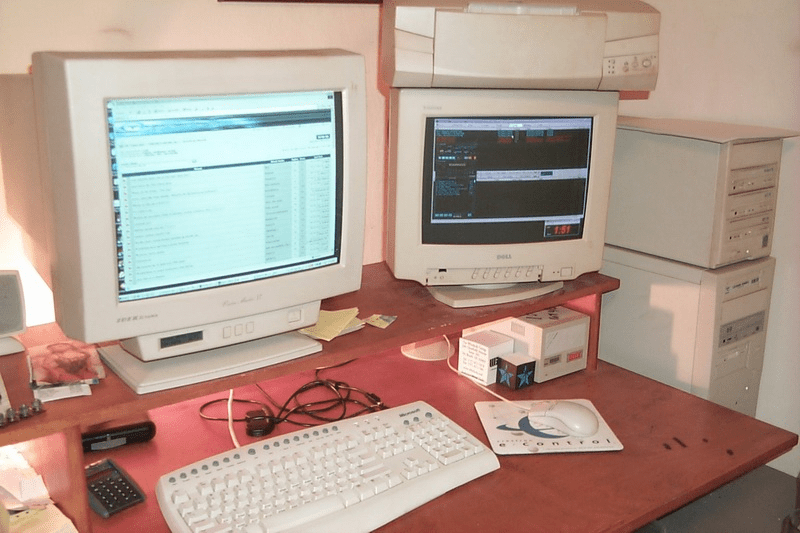
The turning point in Houston’s digital history was the shift from slow dial-up connections to broadband access. It was a game-changing leap forward. In the late 1990s and early 2000s, major telecom giants like SBC (which later became part of AT&T) and Comcast began aggressively expanding their networks.
These companies brought DSL and cable internet technologies to residents, providing a permanent connection without the annoying modem noise or the need to tie up the phone line. Downloading pages and files, which used to take minutes, now took mere seconds. As a major business and industrial hub, Houston was one of the first cities to benefit from this infrastructure expansion. Thanks to these changes, the internet, which had been an exclusive luxury, became an accessible tool for everyone’s daily life. This period laid the groundwork for the city’s current digital landscape.
A Powerful New Tool
With fast, stable connections, the internet became a core part of Houstonians’ daily lives. Streaming services, social media, online shopping, and video hosting platforms all emerged. Local businesses and institutions began to create websites, and the city’s economy got a major boost from the rise of online commerce. Access to the web was no longer just a way to connect; it became essential for work, education, and entertainment.
Today, the internet in Houston is not just a service but an integral part of life, providing access to information and communication at an unprecedented speed. The city’s modern network infrastructure is built on high-speed technologies, primarily fiber-optic lines, offering speeds that seemed impossible 20 years ago. Houston can proudly boast one of the most developed network infrastructures in Texas. This allows residents to easily stream 4K video, work remotely, take online classes, and enjoy multiplayer games without any lag. Major providers like Xfinity and AT&T are actively expanding their networks, offering faster and more stable connections.
Furthermore, wireless connectivity is rapidly expanding throughout the city: broad 5G coverage and public Wi-Fi hotspots make it possible to stay connected almost anywhere, from city parks to busy business districts. The internet is no longer just a tool—it has become the foundation for a “smart city,” where everything from traffic lights to public transit is connected on a single network. This is the final chapter of a story where Houston has fully adapted to the digital world, offering its residents and visitors unlimited opportunities.

