
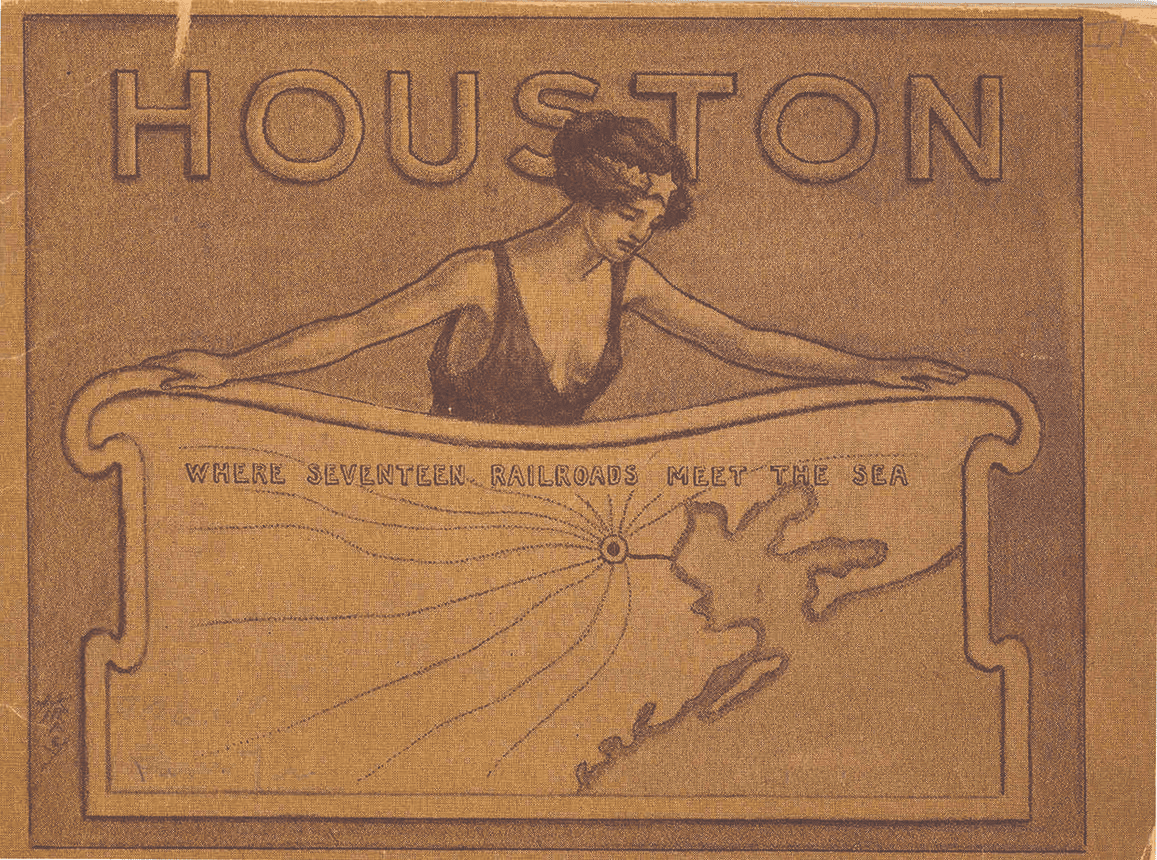
From the very beginning of Houston’s founding, a railroad was a necessity. When the Allen brothers were first planning the city, they envisioned it as a major transportation hub. Later, in the 20th century, a popular slogan used to advertise the city would be, “Houston is where 17 railroads meet the sea.” The story of the railroad’s development in Houston is full of surprising turns. But first things first. Read more at houston-future.
A Difficult Beginning
As we’ve noted, when John and Augustus Allen chose the territory for their new city, they paid close attention to its potential for future cargo transport. The future city’s location had two key advantages: a connection to the coast and foreign countries, and access to various parts of the Republic of Texas. However, after an advertising campaign in which the entrepreneurs claimed that Houston was easily accessible by river, the brothers discovered that the Buffalo Bayou wasn’t deep enough for navigation. This was a significant problem.
The young city needed materials and provisions, which could only be delivered by ox or mule teams. The roads of early Texas were either extremely poor or nonexistent. During rains, the soil would wash out so badly that the roads turned into an impassable mire, making logistics a serious challenge. The existing success of rail logistics in other states led the founding fathers to believe it was the only viable transportation solution. They began to push the idea of establishing a railway connection.
Using all available levers of influence, the Houston authorities began to lobby for the construction of a railroad. Interestingly, a man named Ebenezer Allen was appointed to oversee the work on the Houston railroad charter. It’s unknown whether he was a relative of the founding Allen brothers or simply shared the same last name. Be that as it may, on March 11, 1848, permission to lay the railway was granted.
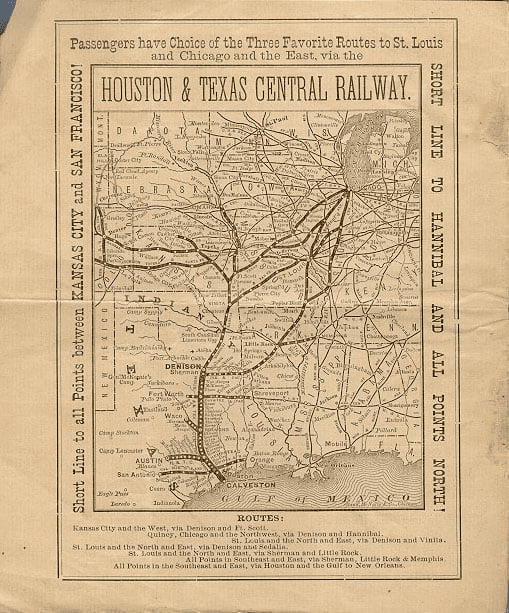
But the Houstonians’ joy was premature. The first rails weren’t actually laid until five years later, in January 1853. Progress was painfully slow. After three years of work, only 25 miles of track had been laid. But it was a start. On September 1, 1856, the Houston and Texas Central Railway Company was formed. Five years later, the train could travel the 81-mile distance to Millican.
The Civil War brought this crucial work to a halt. Construction of the railway didn’t resume until 1867. This time, things moved much faster. The railway workers made a major breakthrough, managing to build a crossing over White Oak Bayou and a swing bridge over the Buffalo Bayou. The rail network expanded, and more lines were added. In 1871, a connection to Corsicana opened, followed by Dallas the next year, and Denison a year after that. The Denison junction connected Houston to Missouri and Kansas, and from there to St. Louis and the East.
The First Railroad: BBB&C
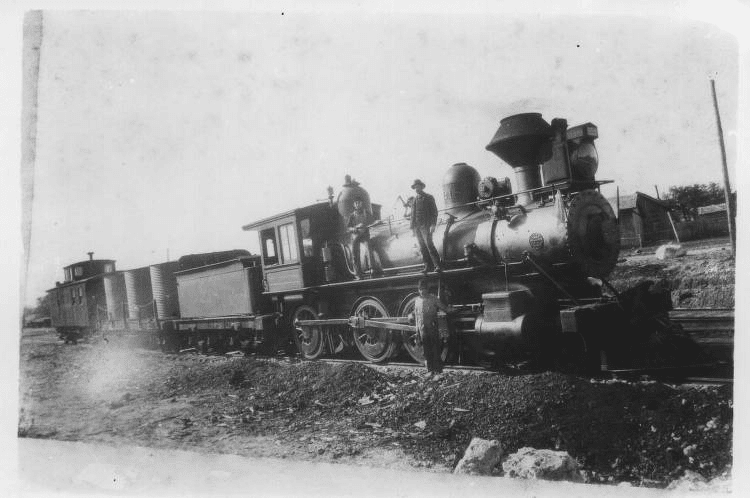
The first locomotive to arrive in Houston was named the General Sherman, in honor of General Sidney Sherman, a hero of the Battle of San Jacinto. In addition to his military prowess, he was also instrumental in founding the Buffalo Bayou, Brazos and Colorado Railway (BBB&C). Although the history of the BBB&C was relatively short, it played a leading role in establishing rail logistics not only for Houston but for the entire region.
Founded in 1850, the company had a grand goal: to connect Houston with the western territories. This would have significantly accelerated the city’s development, spurred trade, and helped populate the region with new workers. From its very first days, the BBB&C faced a host of problems. The first major issue was a lack of skilled professionals. There was even a severe shortage of simple manual laborers.
The local terrain was very difficult, requiring a large number of hands. The next problem was a lack of funds. But despite all the setbacks, the railway construction moved forward. Mile by mile, with great difficulty, the first railway line advanced. The launch of the first train was a truly landmark event. It ultimately helped accelerate Houston’s formation as a city. The population grew much more rapidly, as it became easier to reach this challenging region.
People came in search of a better life, which meant a growing workforce. This, in turn, spurred economic growth. Trade improved significantly, and Houston gradually became an important transportation hub. But things weren’t rosy right away. Since there was no direct connection between the railroads running out of Houston, goods arriving in the city had to be unloaded, transported to another terminal, and reloaded. This greatly complicated the work, but it was still easier than before.
In 1877, the BBB&C was absorbed by the Texas and Pacific Railway. Regardless, the Buffalo Bayou, Brazos and Colorado Railway was the first railroad to operate in Texas. It also went down in history as the oldest component of the Southern Pacific Railroad system.
“Seventeen Railroads Meet the Sea”
Houston entered the new century with a major railway system. By the early 1900s, several railway lines had already been laid to the city, totaling 2,440 miles of track. The young city continued to develop in this regard. The railroad was improved and extended. By the 1920s, you could travel by rail from Houston to practically any city in the USA. By 1932, the length of the railway network had grown to nearly 18,000 miles. Thanks to the railroad, Houston became a well-known city, which fueled its economic development.
During this time, 32 trains stopped at the city’s central station daily. For comparison, the entire southern part of the Southern Pacific line had only 30 trains. This allowed Houston to become the economic center of the region. The first half of the 20th century was an economic boom for Houston, made possible only by the railroad. It’s no wonder many believed that the railroad turned Houston into the energy capital of the world. And it wasn’t just energy that thrived. Thousands of tons of cotton were shipped by rail from the city, and other products also passed through the Houston rail hub.
In addition to its economy, the city also grew culturally. Various cultural figures came to Houston on tour, from popular jazz bands of the day to world-renowned theatrical premieres.
The Decline of Rail Transport
The second half of the 20th century marked the beginning of the railroad’s decline. This was preceded by the rise of the automobile industry and air travel. The convenience of cars and the speed of airplanes managed to win over travelers. Freight traffic remained, but with the development of the Port of Houston, a significant portion of cargo began to be transported by water. By 1980, the number of railway lines in Houston had dwindled to just six. By the early 2000s, only three remained.
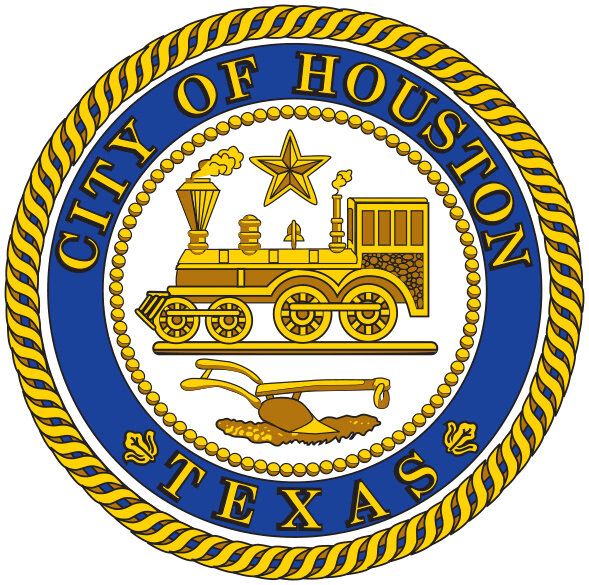
Despite its rapid rise and swift decline, there would be no Houston without the railroad. That is no exaggeration. As a tribute to this mode of transport, the Great Seal of the City of Houston features a locomotive. It’s not just a symbol of movement and progress; it’s a tribute to the tireless work of all the railroaders who contributed to the development and prosperity of Houston.