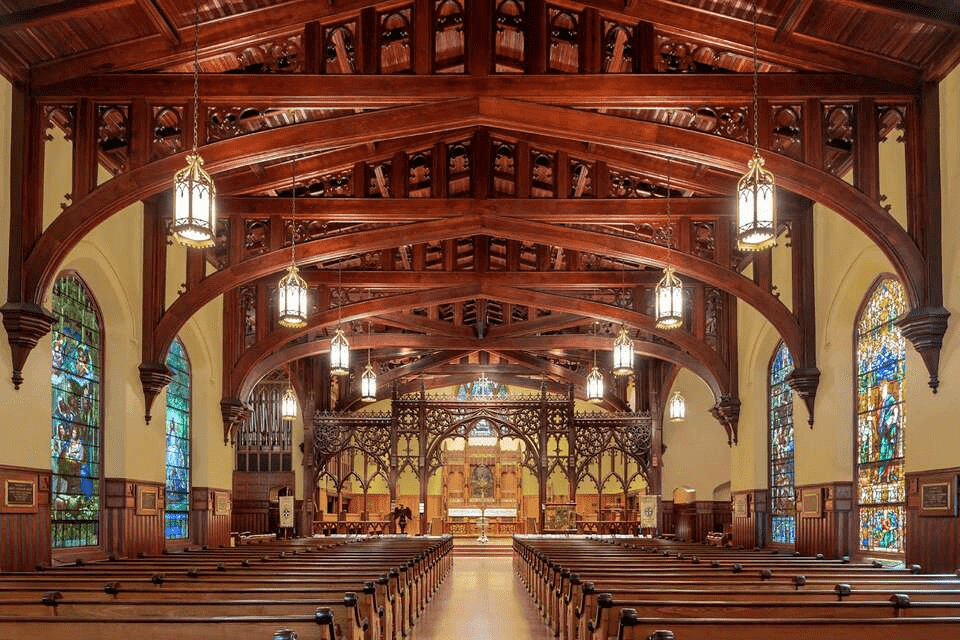

Houston is a truly multicultural city. Unsurprisingly, a wide range of faiths and beliefs are represented here, including Krishnas, Buddhists, Muslims, and many other religious adherents. Yet, the largest percentage of the population is Christian. From Houston’s founding, missionary preachers arrived in the city, spreading the Christian message of salvation. Following old tradition, people began building churches for this mission. The first significant spiritual island in the city was Christ Church. Let’s talk more about its history on houston-future.
Historical Context
Christianity began to spread in Houston simultaneously with the arrival of the city’s first settlers. As soon as believers arrived, small churches began to appear. They were modest, often resembling a simple wooden shack—unplaned walls, rough benches, and minimal interior décor. Nevertheless, it was a sanctuary where residents, thirsty for the word of God, gathered. From the start of the young city’s development, various religious movements began to emerge. The largest were representatives of the Protestant branch of Christianity, including Baptists, Methodists, and Presbyterians.
As the city grew, more people arrived, naturally bringing their faith with them. By the beginning of the 20th century, nearly all existing Christian denominations were represented in Houston.
Congregations expanded, and new Christian churches, cathedrals, and houses of worship were constructed. They became increasingly refined and larger. Fortunately, many of them have survived to this day. They are not merely architectural monuments of the past but true witnesses to the city’s spiritual transformation and that of its inhabitants.
The role of the Christian church in Houston cannot be overstated. Churches served as centers of culture and enlightenment. Schools were opened at churches, and significant donations were given to charity to support hospitals and orphanages.
The 20th century saw a major expansion of all denominations and the emergence of new, large, and magnificent churches. During this time, the educational and charitable work of these institutions also deepened. In the modern world, Christianity continues to hold the lead among all religions in Houston. Christianity has not only upheld the tradition of supporting the city’s social projects but has also gifted future generations many cultural landmarks. Among them are beautiful examples of various architectural styles of these places of worship.

The Genesis of Christ Church
History records that the first Episcopal minister to arrive in Texas was the Reverend Richard Salmon. He arrived in the Lone Star State in 1836, the same year Houston was founded. The high-ranking clergyman was clearly concerned about the needs of his congregation, as he didn’t settle into luxury but traveled frequently despite the turbulent times.
It is reliably known that he arrived in Houston in 1838, just two years after its founding. Since the young city lacked dedicated religious buildings for services, believers gathered in the city hall building. To remedy this, Richard Salmon personally requested that the city council allocate land for the construction of a church.
Without waiting for the official decision, and with Salmon’s blessing, the Episcopal congregation was officially established in Houston under the name “Christ Church.” Official records state that this event took place on March 16, 1839. Those same sources confirm that Christ Church became the first chartered congregation in Houston. The head of the community was William Fairfax Gray. Although he was a “foreigner” from Virginia, he enjoyed a good reputation among the city’s faithful. Like most residents at the time, he came to Houston seeking new opportunities for prosperity. With a background as a lawyer, he hoped to build a successful career in the new location. With the support of the bishop and the trust of the congregation, William Gray began the work of building a new church under the supervision of the then-rector, Charles Gillette.
The Church’s First Buildings
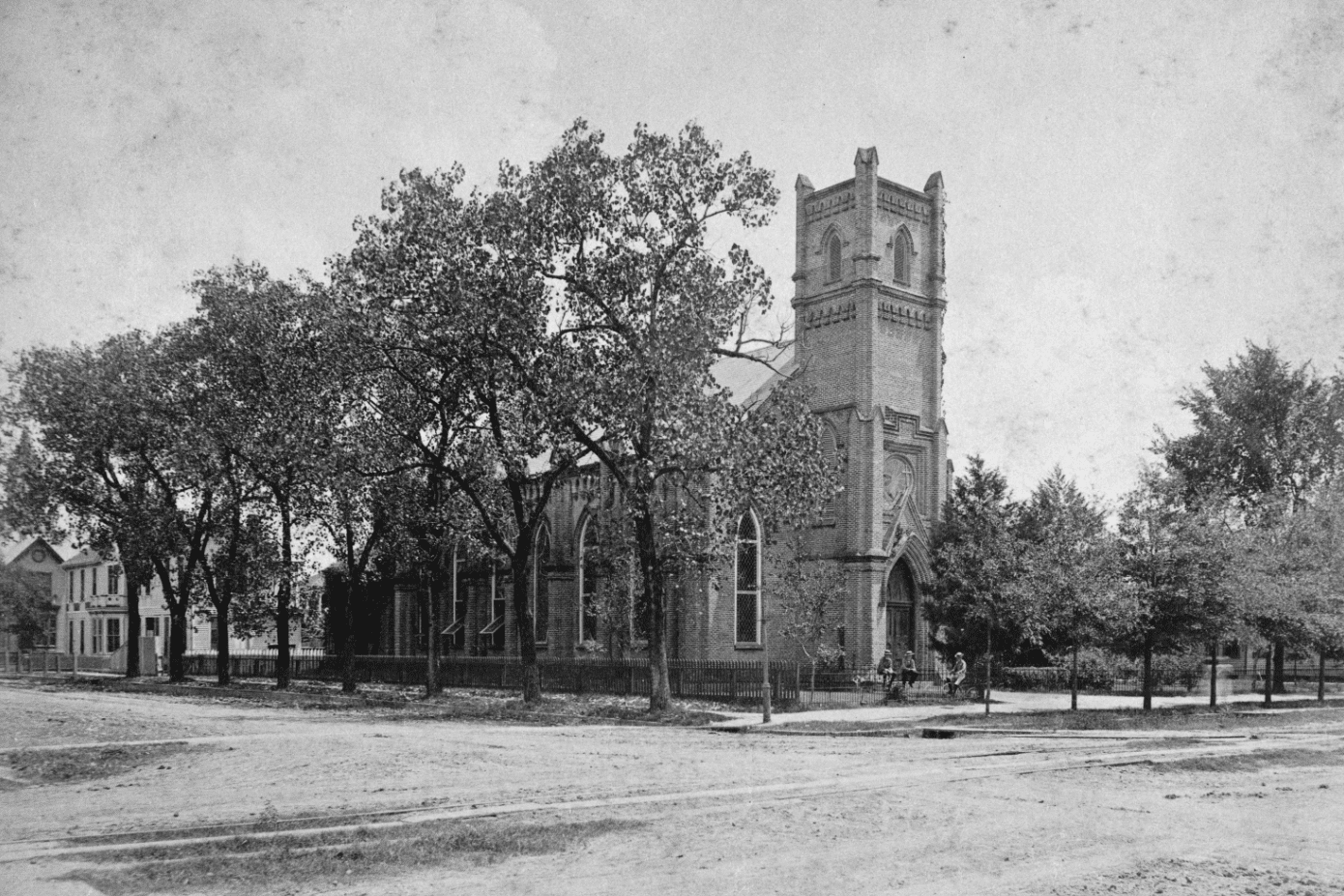
Six years after the congregation was founded, the church doors opened to the faithful in 1845. This was a momentous occasion for the city. For 10 years, the building served as a spiritual oasis for residents seeking God. But over time, the city grew, the number of parishioners increased, and the church became too small to accommodate everyone. Consequently, in 1859, the decision was made to add a new section to the existing building. This expansion took 15 years to complete, mainly due to the Civil War.
However, during those years, Houston doubled in size, and even this expansion could not hold all the parishioners. The vestry once again decided to enlarge the sanctuary. This time, the idea was to build a separate structure next to the existing church and then connect them. But during the connection phase, an unforeseen disaster struck: the majority of the original main church structure collapsed.
Although this event was a major setback, the congregation immediately regarded it as a test from the Lord. They decided to clear the site and build a new, larger, and sturdier church there. Only the intricately carved altar screen and the stained-glass windows were saved from the old building. The new, much-larger church was opened in 1893.
The Great Fire
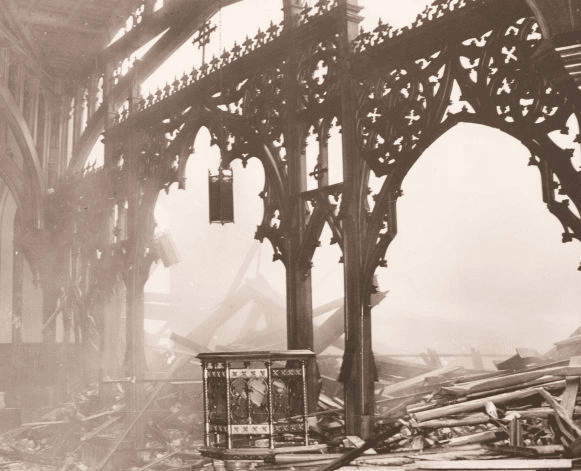
For many years, Christ Church was a place for saving souls, holding Holy Communion, and performing weddings and baptisms for generations of Houston residents. But in 1938, a massive fire occurred, causing significant damage. While the walls were damaged, they remained standing, but the interior decoration and the roof were completely destroyed.
The carved altar, which the congregation was so proud of, was successfully saved thanks to the heroic efforts of firefighters, who managed to douse it with water despite the significant height. The stained-glass windows were also saved, becoming a symbol of the indestructibility of Christ Church in Houston.
To support the church’s parishioners, the entire city rallied around their problem. Thanks to donations from Houstonians, the necessary funds were raised to cover the damages and repair the church. Because of this unity, the church was quickly restored, and specially for the day of its re-consecration and the centennial of its founding, Everett Titcomb composed the hymn “Now, Praise the Lord.”
The Cathedral Status
Calm returned to Christ Church. Every Sunday, praises were offered to the Lord, and sacraments were administered. In 1949, Christ Church was granted the status of Cathedral of the Diocese of Texas. This status remains with the church to this day. It also houses the residence and office of the Bishop of Texas.
Given the multi-ethnic nature of the congregation, six services are held here every Sunday, each in a different language. The Cathedral is open beyond Sundays, too. You can step into the sanctuary daily at any time to unburden your soul during the sacrament of confession or to talk to God in private. You don’t even have to be Episcopalian. The doors are open to everyone, regardless of denomination or creed.
The Cathedral also runs many other community and educational programs aimed at helping the residents of Houston. A large preschool operates within the church. Having navigated a difficult path to establishment and endured significant trials, Christ Church Cathedral continues to be a spiritual wellspring for thirsty believers and a gem of Houston.