

There’s an old notion that life in frontier towns was driven by a few basic, male-dominated pursuits. While some of those pursuits, like horsemanship, were purely a man’s affair, others required the participation of women. So, what was the situation like in Houston’s early days, and how did the men of the city address their more intimate needs? We’ll explore that ahead on houston-future.
Ladies of the Night in the Lone Star State
When it came to vice, Texas was no different from any other state. Wherever the first settlements appeared, so too did representatives of the world’s oldest profession. Throughout the state’s history, attitudes toward prostitution have varied. There was a time when legalization was officially considered. Later, public opinion shifted, and prostitutes were driven out of cities, their brothels burned to the ground. But most often, authorities simply turned a blind eye to the phenomenon, thereby tolerating it.
The attitude of society and government toward prostitution is perhaps best characterized by the words of a Galveston mayor who served from 1947 to 1955. He famously said, “If God couldn’t stop prostitution, why should I?” This position is easily explained: power was held entirely by men, and men’s priorities often aligned with certain basic interests.
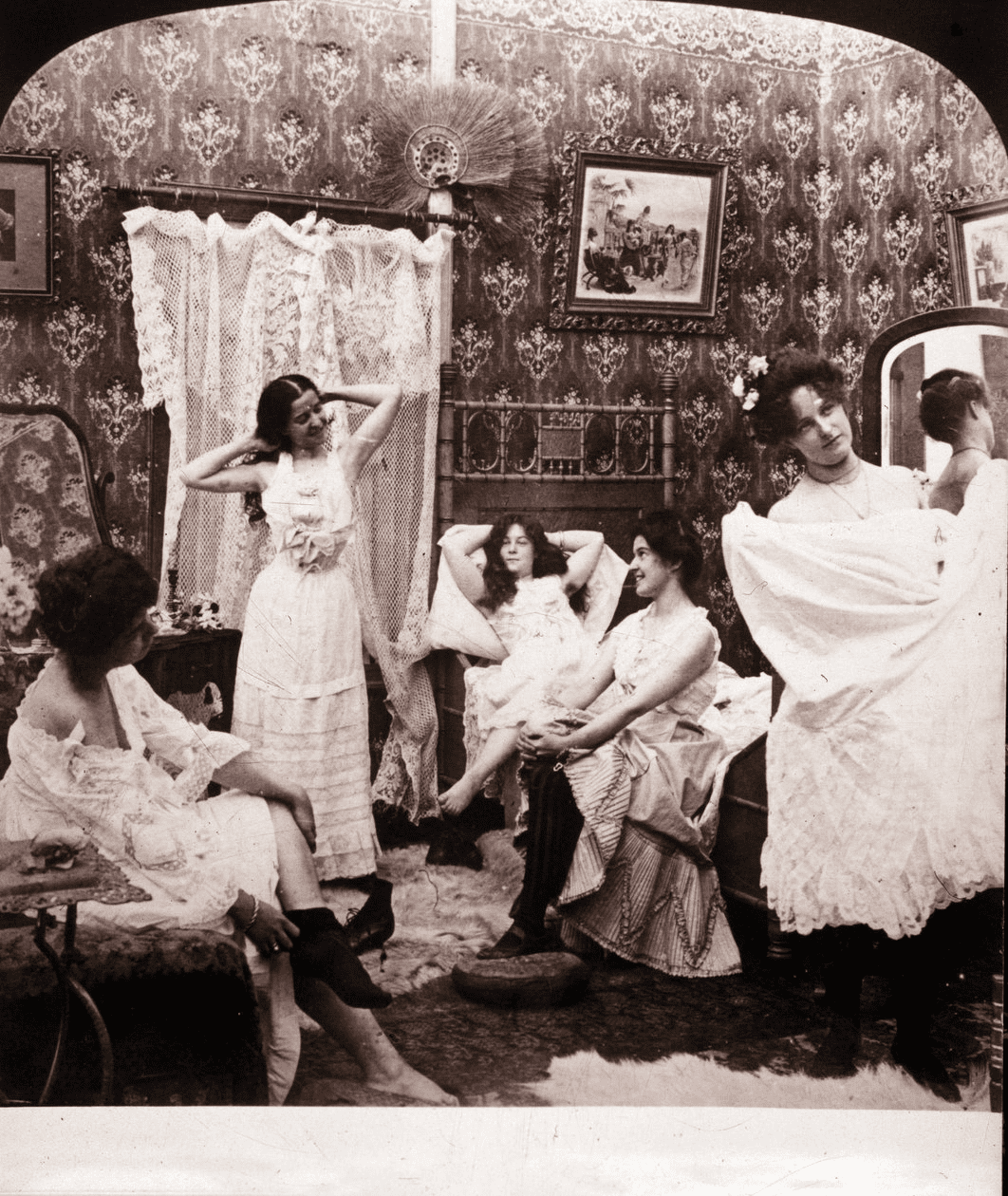
Thus, from the founding of any city in the state, prostitutes appeared alongside the first settlers. To be fair, it was not an overwhelmingly widespread phenomenon. “Ladies of the night” were strictly forbidden from appearing in respectable neighborhoods. Therefore, they settled in the least conspicuous areas, where prostitution coexisted with gambling, drunkenness, robbery, and poverty.
Attempts at Change
At the turn of the 20th century, society demanded that city authorities across the state ban prostitution. The pressure from the public and church groups was significant, forcing city administrations to react.
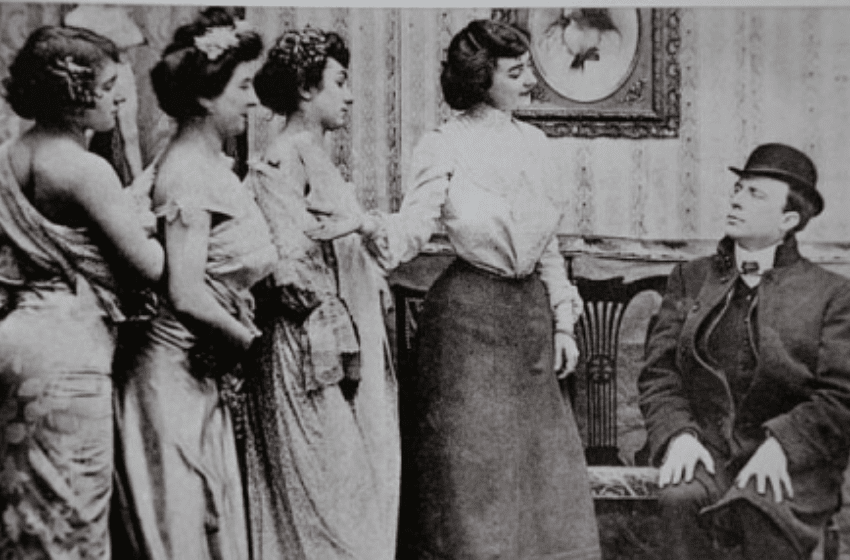
To have their cake and eat it too, some cities—like Waco, El Paso, Dallas, and Houston—introduced an unwritten rule. The first part of this oral agreement with the sex workers was that they would agree to pay so-called regular “fines.” This semi-legitimized prostitution, and local authorities took the brothels under their protection. The second rule was that brothels could only be located in specific areas—”vice districts,” as residents later dubbed them.
There was a time when attempts were made to officially legalize brothels. Such establishments were issued licenses after their workers passed a medical examination.
Pimping did not become widespread in Texas until the late 20th century. As a rule, “bawdy houses” were run by madams. Although they tried to stay in the shadows, some names became well-known, among them Madame Blanche Dumont and Mary Porter. Contemporary newspapers also recorded the names of other female proprietors, whose ages ranged from seventeen to a respectable seventy.
During the period between the two World Wars, an order was issued to strictly prohibit prostitution in an effort to protect soldiers from venereal diseases. In the 1960s and 70s, traditional brothels began to decline. Instead, clients met with prostitutes in hotels and cars or ordered escort services to their homes. In the 80s and 90s, the industry began to operate primarily through pimping.
To summarize this historical overview, we can highlight the following points:
- Texas was home to vice districts longer than almost any other part of the United States.
- Brothels existed in a semi-legal state, paying tribute to those in power.
- All attempts to eradicate prostitution failed, in every city across the state.

Vinegar Hill — The First Red-Light District
Houston’s first red-light district was known as Vinegar Hill. There are various theories about its name, from an infestation of vinegaroon scorpions to an unpleasant smell wafting from a nearby vinegar factory. However, according to a contemporary resident quoted in a newspaper chronicle, “Tin Can Alley is the toughest neighborhood not only in Houston, but in the entire South.” This seems plausible, as another newspaper described Vinegar Hill as a place where “one- and two-story brick buildings and dilapidated shacks are scattered haphazardly. There are no fences or sidewalks between the houses, only narrow, trodden paths.”
It was in this Houston neighborhood that the ladies of the night settled, most of them driven into the profession by hardship. The main brothel was run by Caroline Riley, who was known by the nickname “One-Eyed Terror.” Riley was a Black woman, but that didn’t stop her from managing not only the brothel but also overseeing other criminal activities like gambling and drugs. The neighborhood was predominantly a haven for Black residents, but that didn’t prevent other ethnic groups from frequenting it freely.
The police visited from time to time but mostly turned a blind eye to Caroline’s activities. Newspapers mention Madam Riley being brought to justice, but she always got off with fines. However, local religious communities began pressuring the authorities to crack down on debauchery in Houston. Furthermore, a new railway line was planned to run through the district. Local law enforcement and firefighters began a systematic cleanup of the area, gradually demolishing the already flimsy houses. After Caroline Riley’s death, Vinegar Hill was completely torn down, and the Tennison Hotel was built in its place. The prostitutes of Houston were forced to find a new refuge.
Happy Hollow
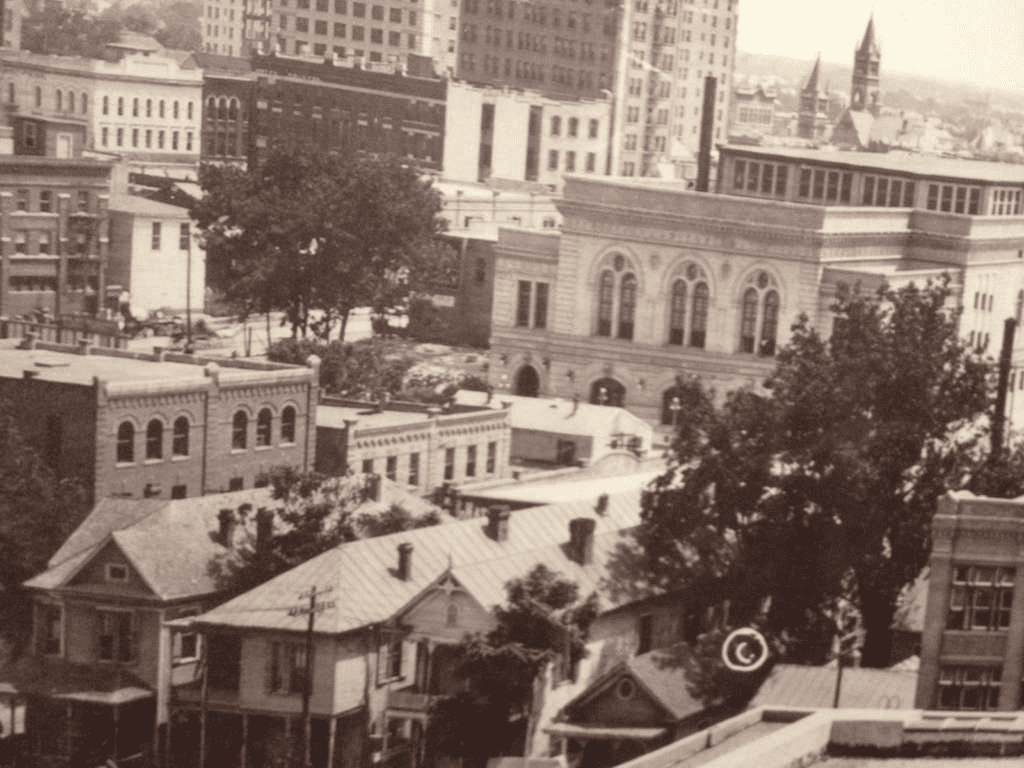
The first mention of Houston’s red-light district, Happy Hollow, appeared in a note in the *Galveston Daily News* on July 9, 1847. It stated that several prostitutes had been arrested after a police raid.
Interestingly, on maps from 1896, this area is shown with two-story wooden houses listed as “female boarding houses”—a curious euphemism for a brothel. According to another source, the 1900 federal census, many residents of Happy Hollow were listed as having been incarcerated for prostitution. The same source noted that most residents were young and illiterate English and Spanish speakers, with a small number of African Americans. Based on this, it’s safe to say that Happy Hollow was indeed another district for paid entertainment.
The area had many saloons that were connected to the brothels by covered walkways. Another interesting fact: when Houston’s police chief, John Jones, issued an order in 1897 prohibiting saloons from operating between midnight and 4 a.m., four establishments in Happy Hollow ignored the ban. One has to wonder why.
This blatant defiance was intolerable to the city’s respectable women, who enlisted the support of church communities. The Shearn Methodist Episcopal Church was particularly active. Opponents of the dissolute lifestyle signed a petition and submitted it to the local authorities.
To appease the angered citizens, the authorities acted shrewdly: they simply did not renew the liquor licenses. No alcohol, no debauchery. Gradually, the red-light district was pushed out of Happy Hollow. In 1908, it moved west to a “reserved” area known as “The Reservation” in the Hardcastle district.
Today, the former site of Happy Hollow is home to the Houston Theater District, the Lancaster Hotel, and office buildings.
New Times
The mid-20th century brought colossal changes not only to the world order but also to the realm of adult entertainment. Brothels as such faded into history. Prostitutes began to work near restaurants and hotels. With the advent of the telephone, industry workers started operating on a call-out basis. Public morality also began to have a more significant influence on the authorities. But it was not, and never will be, possible to eradicate vice, as it remains a highly profitable business. And we shouldn’t forget about the three basic interests of men we mentioned at the beginning of this article.